
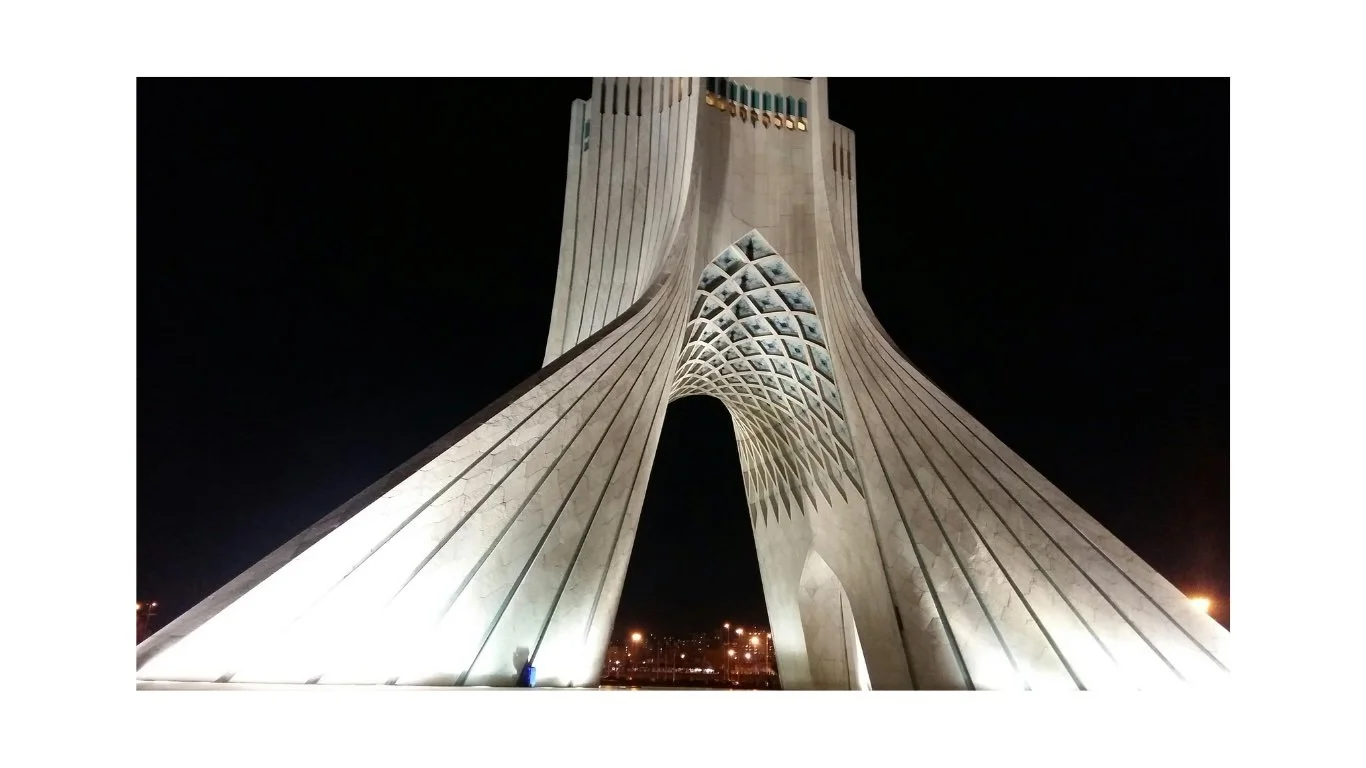
What Businesses Should Know Before Re-Entering the Iranian Market
As interest in future business opportunities involving Iran continues to grow, companies may benefit from understanding key legal and commercial considerations before entering the market. This article discusses trademarks, business structures, contracts, dispute resolution, banking, logistics, insurance, and investment opportunities in Iran.
Recent reports and public discussions have renewed interest in the possibility of expanded commercial opportunities involving Iran. While it remains too early to predict the outcome of ongoing developments, many international companies are beginning to evaluate what a future return to the Iranian market might look like.
With a population of more than 90 million people, a highly educated workforce, substantial natural resources, and a strategic location connecting the Middle East, Central Asia, and Europe, Iran has long been considered one of the region’s most significant markets.
For businesses considering future opportunities in Iran, legal and commercial planning should begin well before any market entry decision is made.
1. Protecting Trademarks and Intellectual Property
One of the first issues international businesses should consider is the protection of their intellectual property.
Trademarks, trade names, logos, and other brand assets often represent significant business value. Taking steps to evaluate trademark protection in Iran before launching operations, advertising products, or entering into distribution arrangements may help reduce future legal risks.
In many markets, intellectual property protection is not an afterthought, it is one of the foundations of a successful market-entry strategy.
2. Choosing the Right Market Entry Structure
Foreign businesses may enter a market through a variety of structures, including:
Distribution arrangements
Agency relationships
Representative offices
Locally incorporated companies
Joint ventures
Strategic partnerships
Each option carries different legal, tax, operational, and commercial implications. Selecting the appropriate structure often depends on the company's objectives, level of investment, and long-term plans.
Careful evaluation at the outset can help businesses avoid unnecessary complications later.
3. Commercial Contracts and Dispute Resolution
Well-drafted contracts are essential to successful business relationships.
Companies planning to work with Iranian partners should carefully address issues such as payment terms, performance obligations, confidentiality, intellectual property rights, limitations of liability, and dispute resolution procedures.
One of the most important provisions in any cross-border agreement is determining both the governing law and the method for resolving disputes.
In international transactions involving the Middle East, arbitration is frequently preferred over litigation. Commercial parties often select arbitration centers in Dubai, London, Singapore, or Geneva because of their experience in handling international business disputes.
A carefully drafted dispute-resolution clause can provide certainty and reduce the risk of costly disagreements in the future.
4. Transportation, Logistics, and Insurance
Transportation and insurance services are often among the first sectors to expand when international trade opportunities increase.
Businesses involved in importing or exporting goods should consider issues such as:
Shipping arrangements
Cargo insurance
Marine transportation risks
Customs requirements
Supply chain logistics
Advance planning in these areas can help minimize disruptions and improve operational efficiency.
5. Banking and Financial Considerations
Access to reliable banking and payment channels is often one of the most important practical considerations for international businesses.
Even when commercial opportunities improve, financial institutions generally require time to assess compliance requirements, risk-management procedures, and internal policies.
For that reason, businesses should evaluate payment mechanisms, banking relationships, and financial compliance issues before making significant commitments.
6. Evaluating Investment Opportunities
Iran offers potential opportunities across a wide range of industries, including:
Energy
Petrochemicals
Technology
Healthcare and pharmaceuticals
Tourism and hospitality
Food and beverage
Consumer products
Infrastructure development
In addition, many international brands remain familiar to Iranian consumers, which may create opportunities for future growth if market conditions become more favorable.
7. The Value of Early Preparation
One of the most common mistakes businesses make in emerging or reopening markets is waiting until every uncertainty has been resolved before beginning their planning process.
In practice, successful companies often start much earlier. They assess legal risks, review intellectual property protections, evaluate potential business partners, prepare contract frameworks, and develop market-entry strategies before opportunities fully materialize.
Businesses that prepare in advance are often better positioned to move quickly when conditions become favorable.
Conclusion
Iran remains one of the largest and most strategically important markets in the Middle East. While the future direction of economic and commercial developments remains uncertain, companies that begin evaluating legal and business considerations today may be better prepared for tomorrow's opportunities.
Trademark protection, business structures, commercial contracts, dispute resolution mechanisms, transportation, insurance, banking arrangements, and investment planning are all issues that deserve careful attention.
In many cases, early legal and commercial preparation can provide a meaningful competitive advantage when new opportunities emerge.
Disclaimer: This article is provided for general informational purposes only and does not constitute legal advice.

Can Foreign Companies Register Trademarks in Iran?
Foreign companies may register trademarks in Iran under certain legal and procedural requirements. This article provides a practical overview of trademark protection under Iranian law and key considerations for international businesses.
As discussions concerning future trade and investment involving Iran continue to reappear in international business circles, many foreign companies may eventually revisit an important legal question: can a foreign business protect its trademark in Iran?
Under Iranian law, the answer is generally yes. Foreign individuals and companies are permitted to apply for trademark registration in Iran, subject to compliance with local laws and registration procedures.
Trademark protection in Iran is primarily governed by Iran’s Law on Registration of Patents, Industrial Designs and Trademarks of 2008 (1386), together with its implementing regulations and related international obligations.
One of the most important principles in Iranian trademark law is the territorial nature of trademark protection. Many companies assume that a trademark registered in the United States, Europe, or another jurisdiction will automatically receive protection in Iran. In practice, however, trademark rights are generally protected on a country-by-country basis. As a result, foreign registration alone may not be sufficient to establish enforceable trademark rights inside Iran.
Article 30 of Iran’s Law on Registration of Patents, Industrial Designs and Trademarks defines a trademark as any visible sign capable of distinguishing goods or services of one person from those of another. Under this definition, words, logos, symbols, labels, designs, and certain combinations of visual elements may qualify for protection if they serve to distinguish products or services in commerce.
Iran is also a member of the Paris Convention for the Protection of Industrial Property. As a result, foreign applicants may benefit from certain international protections, including priority rights based on earlier foreign trademark filings, subject to applicable legal requirements.
At the same time, Iranian law limits the registration of certain categories of marks. Article 32 of the 2008 law prohibits registration of marks that:
are incapable of distinguishing goods or services,
are contrary to public order or public morality,
are deceptive or misleading,
or are identical or confusingly similar to previously registered or well-known trademarks.
In practical terms, this means Iranian authorities may reject marks that could confuse consumers or improperly benefit from the reputation of another brand.
Article 40 of the same law further provides that the exclusive right to use a registered trademark belongs to the registered owner. In practice, registration may therefore become important not only for brand protection, but also for licensing arrangements, distribution agreements, franchising relationships, and enforcement actions involving unauthorized use.
Trademark issues involving Iran may become more complicated when cross-border commercial activity, sanctions regulations, licensing structures, or parallel registrations in multiple jurisdictions are involved. Questions regarding ownership, priority rights, authorized use, and recognition of foreign commercial interests may become legally significant in both litigation and commercial negotiations.
In practice, trademark protection is often more than a technical registration issue. For many businesses, it forms part of a broader legal strategy involving market entry, long-term investment planning, manufacturing relationships, franchising, or protection of commercial reputation.
As discussions regarding future economic engagement with Iran continue to evolve, businesses considering future Iran-related commercial activity may benefit from reviewing their trademark and intellectual property position before entering the market or expanding commercial relationships connected to Iran.

Iranian Mahr in U.S. Courts: Understanding Dowry Under Iranian Law
Iranian Mahr (dowry) is a financial right arising from the marriage contract under Iranian law. This article explains how U.S. courts analyze Mahr, the differences between Iranian and American contract law, and the role of expert testimony in cross-border family law disputes.
Introduction
In recent years, U.S. courts have increasingly encountered disputes involving Iranian marriage contracts and the financial obligation known as Mahr (often translated as dowry). As Iranian communities have grown across the United States, family law disputes involving Iranian marriage agreements have occasionally required American courts to interpret unfamiliar legal concepts originating from Iranian law.
Because Mahr arises from a different legal tradition, attorneys and judges often require expert explanation of how this obligation functions under Iranian civil law. Understanding the legal nature of Mahr is essential for properly analyzing whether and how it may be enforced in U.S. courts.
This article explains the legal concept of Mahr under Iranian law, how it arises from the marriage contract, and why disputes involving Mahr sometimes appear before American courts.
Definition of Contract Under Iranian Law
To understand Mahr, it is first necessary to understand how contracts are defined under Iranian law.
Article 183 of the Iranian Civil Code defines a contract as follows:
“A contract is formed when one or more persons undertake an obligation toward one or more other persons and the obligation is accepted by them.”
This definition differs from the common law understanding of contracts in the United States. Under Iranian law, the core element of a contract is the creation of a legal obligation through mutual consent.
Unlike many common law jurisdictions, Iranian contract law does not require the doctrine of consideration in the same way it exists in U.S. contract law. Certain contracts under Iranian law may involve obligations that appear unilateral from a financial perspective but remain legally valid because they arise from recognized legal relationships.
Marriage is one such relationship.
Differences Between Iranian Contract Law and U.S. Contract Law
Under U.S. contract law, a legally enforceable agreement generally requires the presence of consideration, meaning that each party must provide something of value in exchange for the other party’s promise.
In contrast, Iranian law focuses on the creation of a binding obligation through agreement, even in situations where financial obligations are not strictly reciprocal.
This distinction can sometimes create confusion when U.S. courts encounter contractual provisions originating from foreign legal systems, including provisions contained in Iranian marriage contracts.
One of the most common examples of this issue is the concept of Mahr.
What Is Mahr Under Iranian Law?
Under Iranian law, Mahr is a mandatory financial right that arises from the marriage contract.
Article 1082 of the Iranian Civil Code provides:
“Upon the conclusion of the marriage contract, the wife becomes the owner of the Mahr and may dispose of it in any manner she wishes.”
Mahr is typically specified in the marriage contract at the time the marriage is concluded. It may consist of:
Money
Gold coins
Property
Other valuable assets
The defining legal feature of Mahr is that the wife acquires ownership of the Mahr immediately upon the formation of the marriage contract, even if the payment of the Mahr is deferred until a later time.
Under Iranian law, Mahr is therefore considered a financial right of the wife arising directly from the marriage contract.
Legal Nature of Mahr
It is important to clarify what Mahr is not.
Mahr is not:
A payment made to purchase a bride
A conditional payment required for the validity of marriage
A purely religious promise without legal effect
Instead, under Iranian civil law, Mahr is a legally recognized financial entitlement of the wife that becomes enforceable once the marriage contract is concluded.
Although Mahr has historical and cultural roots in Islamic legal traditions, it is fully incorporated into the statutory framework of the Iranian Civil Code and functions as a legally enforceable obligation within the Iranian legal system.
Why Mahr Disputes Appear in U.S. Courts
Disputes involving Mahr may appear in U.S. courts when couples who were married under Iranian law later reside in the United States and experience marital disputes or divorce.
In such situations, one spouse—often the wife—may seek enforcement of the financial obligation specified in the Iranian marriage contract.
American courts may encounter Mahr claims in several contexts, including:
Divorce proceedings
Contract enforcement actions
Property disputes between spouses
Because the obligation originates under Iranian law, courts may need assistance in determining the legal nature of the Mahr provision.
Legal Challenges for U.S. Courts
When U.S. courts analyze Mahr claims, several legal questions may arise.
Consideration
One issue concerns whether the Mahr provision satisfies the concept of consideration under U.S. contract law. Because the husband typically assumes a financial obligation, courts sometimes examine whether the marriage itself constitutes sufficient consideration.
Religious Character
Another issue arises from the fact that marriage contracts involving Mahr may contain religious language. Courts must determine whether the financial obligation can be interpreted and enforced using neutral legal principles without requiring interpretation of religious doctrine.
Public Policy
Courts may also consider whether enforcement of the Mahr provision would violate public policy principles within the relevant state jurisdiction.
Different courts have addressed these questions in different ways depending on the circumstances of each case.
The Role of Expert Witness Testimony
Because Mahr arises from Iranian civil law and legal traditions unfamiliar to most American judges, expert testimony on Iranian law can play a significant role in litigation involving Iranian marriage contracts.
An expert on Iranian law may assist the court by explaining:
The legal definition of Mahr under Iranian law
How Mahr is created in a marriage contract
When the wife becomes the legal owner of the Mahr
Whether payment may be deferred
The legal consequences of divorce under Iranian law
Such expert testimony helps ensure that courts understand the legal context in which the original marriage contract was formed.
Conclusion
As cross-border marriages become increasingly common, American courts are more frequently asked to evaluate legal obligations originating from foreign legal systems. Mahr, as a financial right arising from Iranian marriage contracts, represents one example of how differences between legal traditions can create complex legal questions.
Proper understanding of Iranian civil law principles is essential for attorneys and courts handling disputes involving Iranian marriage agreements.
Expert Witness on Iranian Law
Amin Alemohammad is a Special Legal Consultant licensed in Washington, D.C., and a member of the Iranian Bar. He provides expert testimony and legal analysis on Iranian law for attorneys and courts throughout the United States in matters involving Iranian family law, inheritance, property law, and marriage contracts.

Iranian Contract Law: Essential Elements of a Valid Agreement
What makes a contract legally valid under Iranian law? This article explains the four essential elements of a valid agreement under the Iranian Civil Code.
Introduction
As cross-border legal matters involving Iran continue to arise in international litigation and arbitration, it becomes increasingly important for foreign lawyers and courts to understand the basic principles of Iranian contract law. Iranian law is primarily based on the Iranian Civil Code (Qanun-e Madani), which incorporates elements of Islamic jurisprudence as well as civil law traditions.
One of the most important provisions governing contracts in Iran is Article 190 of the Iranian Civil Code, which establishes the essential elements required for the validity of a contract. Understanding these elements is particularly important for international practitioners handling disputes involving Iranian parties, Iranian assets, or agreements governed by Iranian law.
This article provides a concise overview of the fundamental requirements for a valid contract under Iranian law and explains their relevance in international legal practice.
1. Intent and Consent
(Intent and Consent in Iranian Contract Law)
The first essential requirement for a valid contract under Iranian law is the presence of intent and consent.
Intent refers to the genuine intention of the parties to create a legal obligation. Consent refers to the free and voluntary agreement of the parties without improper pressure or deception.
Iranian law recognizes several factors that may invalidate consent, including:
Mistake
Fraud (Tadlis)
Duress (Ikrah)
If a contract is concluded under coercion or through fraudulent misrepresentation, the affected party may challenge the validity of the agreement. These principles are broadly comparable to doctrines recognized in many civil law and common law systems.
2. Legal Capacity of the Parties
(Legal Capacity in Iranian Civil Law)
The second requirement concerns the legal capacity of the contracting parties.
Under Iranian law, a person must possess the legal ability to enter into binding agreements. Legal capacity generally requires three elements:
Majority (Bulugh) – reaching the legal age of maturity
Sound mind (Aql) – mental competence
Financial competence (Rushd) – the ability to manage financial affairs
Individuals who lack full legal capacity include:
Minors
Insane persons
Prodigal persons (Safih) – individuals incapable of managing financial matters
Contracts entered into by persons lacking capacity may be void or voidable, depending on the circumstances.
In cross-border cases, questions of legal capacity are often determined by personal status law, which may depend on the individual’s nationality.
3. Definite Subject Matter of the Contract
(Subject Matter in Iranian Contract Law)
A valid contract under Iranian law must also have a definite and identifiable subject matter.
The subject matter refers to the property, service, or obligation that forms the object of the agreement. Iranian law requires that the subject matter satisfy several conditions:
It must be clearly identifiable
It must have economic value
It must be lawfully transferable
It must be capable of delivery
For example, a contract for the sale of a specific property or the provision of professional services would satisfy this requirement.
However, contracts involving objects that are legally prohibited or impossible to deliver may be considered invalid.
4. Lawful Purpose of the Contract
(Lawful Purpose in Iranian Civil Law)
The fourth essential requirement concerns the lawful purpose of the contract.
Iranian law does not require that the purpose or motive of a contract be explicitly stated in the agreement. However, if the purpose of the transaction is specified and it is unlawful, the contract becomes invalid.
For instance, a contract entered into for the purpose of committing an illegal act would be considered void.
This concept resembles the doctrine of illegality in contract law, which is widely recognized in many legal systems.
Relevance in International Legal Practice
Understanding these four elements is particularly important in international disputes involving Iranian law.
Foreign courts, arbitration panels, and legal practitioners frequently encounter cases involving:
Iranian commercial agreements
Cross-border investment disputes
Property transactions involving Iranian assets
Enforcement of Iranian contracts abroad
In such cases, determining the validity of the underlying contract under Iranian law can play a critical role in resolving the dispute.
For example, in litigation before U.S. courts, expert testimony may be required to explain whether an agreement satisfies the requirements of Iranian contract law.
Conclusion
The Iranian Civil Code establishes four fundamental elements that must exist for a contract to be legally valid:
Intent and consent of the parties
Legal capacity of the parties
A definite subject matter
A lawful purpose
These principles form the backbone of Iranian contract law and are essential for international lawyers handling disputes involving Iranian parties or Iranian law.
A clear understanding of these rules can help courts, arbitrators, and practitioners properly evaluate contractual obligations arising under Iranian law and ensure that cross-border disputes are resolved on a sound legal basis.
About the Author
Amin Alemohammad
Iranian Attorney | Special Legal Consultant (D.C. Bar)
Amin Alemohammad focuses on Iranian law and cross-border legal matters including expert testimony on Iranian law.
Contact: 1-844-IRAN-LAW

Understanding Iranian Inheritance Law: What U.S. Attorneys Should Know
Cases involving Iranian estates often raise complex legal questions in U.S. courts. This guide explains the structure of Iranian inheritance law and the issues attorneys should understand when dealing with assets or heirs in Iran.
Cross-border inheritance disputes involving Iran are becoming increasingly common in U.S. courts. These cases often involve Iranian nationals who have assets, family members, or legal ties both in Iran and abroad. When such matters arise, U.S. attorneys and courts frequently encounter legal questions related to Iranian inheritance law that differ significantly from Western legal systems.
Because Iranian inheritance law is rooted in both statutory law and Islamic jurisprudence, understanding its structure and limitations is essential when handling cases involving Iranian estates or heirs.
Legal Framework of Inheritance in Iran
Inheritance in Iran is primarily governed by the Iranian Civil Code, particularly Articles 861 through 949. These provisions establish a detailed system determining:
who qualifies as an heir
how inheritance shares are calculated
how property is distributed among heirs
Unlike many Western jurisdictions, inheritance rights in Iran are largely predetermined by law rather than by testamentary freedom.
While individuals may leave a will, Iranian law restricts testamentary disposition to one-third of the estate unless all heirs consent to a larger distribution.
Classes of Heirs Under Iranian Law
Iranian inheritance law organizes heirs into three hierarchical classes. The existence of heirs in a higher class prevents heirs in lower classes from inheriting.
First Class of Heirs
The first class includes:
children and descendants
parents
spouse
This class takes priority over all other relatives.
Second Class of Heirs
If no heirs exist in the first class, inheritance passes to the second class:
grandparents
brothers and sisters
descendants of siblings
Third Class of Heirs
If neither the first nor second classes exist, inheritance passes to more distant relatives such as:
uncles and aunts
cousins
Distribution of Shares
Iranian law provides fixed shares for certain heirs. For example:
A spouse is always entitled to a legally defined portion of the estate.
Sons generally receive twice the share of daughters under traditional inheritance rules.
Parents may also receive defined portions depending on the existence of children.
These predetermined shares often create confusion in U.S. legal proceedings where courts are more accustomed to flexible estate planning structures.
Limitations on Wills
A key feature of Iranian inheritance law is the limitation placed on testamentary freedom.
An individual may only dispose of one-third of their property through a will. The remaining two-thirds must be distributed according to statutory inheritance rules.
If a testator attempts to distribute more than one-third of their estate through a will, the excess portion requires approval from all legal heirs.
This rule frequently becomes relevant in disputes involving Iranian nationals who created wills abroad.
Recognition of Foreign Probate Judgments
One of the most significant legal challenges arises when a U.S. probate judgment must interact with Iranian legal processes.
In practice, Iranian authorities typically require that inheritance matters involving property located in Iran be addressed through Iranian probate procedures, including the issuance of a Certificate of Inheritance (Tasdigh-e Enhesar-e Verasat).
As a result, even when a probate proceeding occurs in the United States, additional legal steps may be required within Iran before assets can be transferred or registered.
Common Issues in U.S. Litigation
U.S. courts may encounter several recurring questions involving Iranian inheritance law, including:
determining the identity of lawful heirs under Iranian law
interpreting the validity of Iranian wills
understanding inheritance shares under Iranian statutes
determining whether Iranian property can be distributed under a foreign court order
In such cases, courts often rely on expert testimony to interpret the relevant provisions of Iranian law.
The Role of Expert Testimony on Iranian Law
When disputes involve foreign law, U.S. courts may admit expert testimony to assist in determining the content and application of that law.
In cases involving Iranian inheritance matters, an expert may provide opinions regarding:
the governing Iranian legal framework
statutory inheritance shares
probate procedures in Iran
the legal validity of Iranian civil documents
Expert analysis can be critical in helping courts understand how Iranian law applies to specific family or property disputes.
Conclusion
As international families and cross-border assets become more common, disputes involving Iranian inheritance law are increasingly appearing in U.S. courts. Because Iranian law differs significantly from Western legal systems, careful analysis is often required to properly interpret and apply its rules.
Attorneys handling cases involving Iranian estates, heirs, or property should consider consulting qualified professionals familiar with the structure and application of Iranian law.
Expert Assistance
If you are an attorney handling a case involving Iranian inheritance law, our office provides expert opinions and testimony on Iranian law in U.S. legal proceedings.
For inquiries regarding expert witness services, please contact:
1-844-IRAN-LAW
www.1844iranlaw.com